


- Your cart is empty Browse Shop
Kenya Coffee Harvest Timing: 5 Essential Secrets to a Perfect Cup
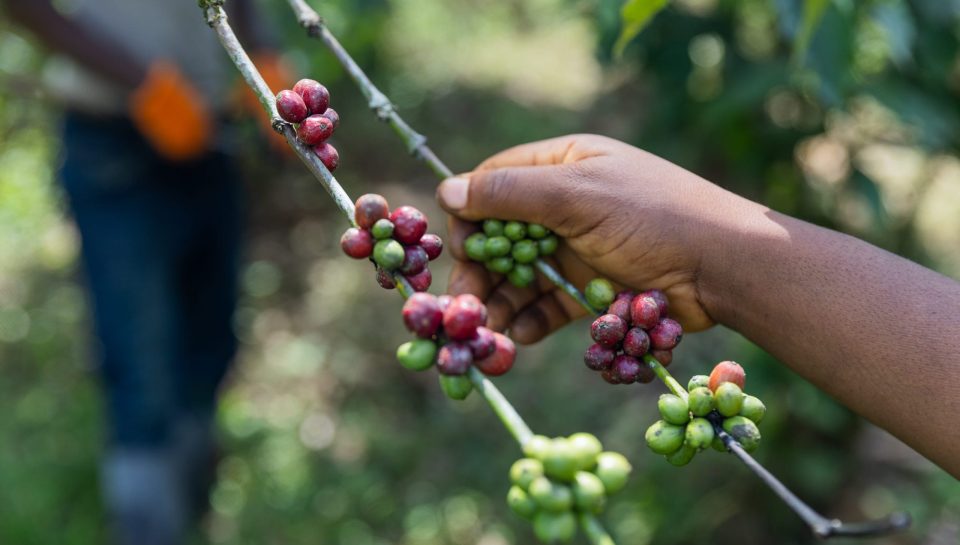
Kenya coffee harvest timing decides more than when farmers pick cherries. It decides whether a lot tastes bright and balanced, or falls flat in the cup. Ask a grower in Nyeri, Kirinyaga, or Murang’a when the coffee is “ready.” You’ll get a far more precise answer than the calendar suggests. In Kenya’s Central Highlands, timing isn’t a small detail, it’s the whole craft.
1. Two Harvests Shape the Kenya Coffee Season
Kenya doesn’t have one coffee season. It has two. Rainfall here is bimodal, so the crop comes in two separate windows each year.
The main harvest follows the long rains. It runs from October through December, sometimes into the new year at higher farms where cherries ripen slowly. This crop produces most of Kenya’s export volume, along with its best-known lots; dense, evenly ripe cherries with the classic Kenyan cup: blackcurrant and citrus acidity, full body, a long finish.
The second harvest, known locally and in the trade as the “fly crop,” follows the short rains and typically runs from June through August. It’s smaller — often a fraction of the main crop’s volume — and the cherries ripen less uniformly. That doesn’t make it lesser coffee, but it does make it different coffee: more variable in character, often prized by roasters looking for something outside the main-crop template. For an export business, it also means two separate windows a year to plan shipments, manage cash flow with cooperatives, and match specific lots to specific buyer specifications.

2. Altitude Is the Real Clock
Rainfall sets the Kenya coffee season. Altitude sets the pace inside it.
Our washing stations sit between roughly 1,500 and 2,100 meters across Nyeri coffee, Kirinyaga coffee, and Murang’a coffee country. That range matters more than most buyers realize. Higher plots mean cooler nights and slower sugar development, so cherries take longer to move from flower to full ripeness.
A cherry at 1,900 meters is not on the same clock as one at 1,500 meters, even if both trees flowered the same week. This is why plot-level traceability matters: knowing the exact farm and its elevation tells a buyer more about likely cup quality than a regional label ever could.
3. Why Handpicking Still Wins
Kenya’s coffee industry runs on smallholders and cooperatives, not large estates. That makes selective handpicking the norm.
Pickers walk the same trees several times each harvest. Each pass, they take only the fully ripe, deep-red cherries and leave the rest for later. It’s slow and labor-intensive. Machine harvesting is faster, but it strips whole branches — ripe, unripe, and overripe cherries together.
That difference is exactly why Kenya AA coffee scores as high as it does. The SCA 84–87+ range we see consistently in our AA and AB grades starts in the field, not the cup lab. Machine harvesting simply doesn’t fit the quality tier international buyers expect from Kenyan origin.
4. Processing Turns Timing Into Flavor
Once cherries are picked, the clock keeps running. Nearly all washed coffee Kenya produces goes through the same steps: pulping, fermenting, washing, and sun-drying on raised beds. Each step is time-sensitive.
Wait too long between picking and pulping, and over-fermentation sets in. That shows up in the cup as unwanted funk instead of clean acidity. This operational side of harvest timing rarely makes it into origin marketing, but it matters enormously — a washing station’s ability to process same-day arrivals and manage drying beds without overcrowding is as much about logistics as it is about technique.
This is also where traceability earns its keep. Through Grow by Xcado, our coffee traceability Kenya platform, we track every lot from plot to washing station to export. That means we can tell a buyer not just which variety they’re getting — SL28, SL34, Ruiru 11, or Batian, our core SL28 SL34 coffee varieties — but roughly when in the harvest window it was picked and processed.

5. What Kenya Coffee Harvest Timing Means for Buyers
Smart Kenya coffee buyers plan sourcing around the calendar, not just the shipping schedule.
Main-crop lots become available from around December through the first quarter. They offer the most consistent quality and volume — a strong choice for a dependable blend base or a flagship single origin. Fly-crop lots arrive mid-year and suit buyers who want seasonal variety, even at smaller volumes.
Either way, book early. The best lots at the highest-scoring washing stations go fast, and Kenya’s split harvest windows make early booking matter more here than in origins with one large crop.
Freshness matters too. Green coffee holds for months in proper storage, but roasted coffee doesn’t — flavor peaks within about two weeks of roasting. That’s why we recommend high-barrier, degassing-valve bags for any Kenyan coffee export headed into retail rather than straight into blending. A perfectly timed harvest can still be undone by careless packaging three steps down the line.
For a smallholder-driven origin like Kenya, harvest timing isn’t a footnote. It’s the thread connecting a farmer’s choice of which cherries to pick this morning to a roaster’s choice of which lot to feature next quarter. Understand Kenya coffee harvest timing, and you understand Kenyan coffee itself.
For more on sourcing from Kenya, see our Buyer Guides and Compliance & Standards posts, or check the International Coffee Organization‘s crop calendar for regional harvest windows worldwide.

Organic food is not a trend; it's a timeless commitment to our well-being and the well-being of our planet Nature's bounty, cultivated with care, organic food.