


- Your cart is empty Browse Shop
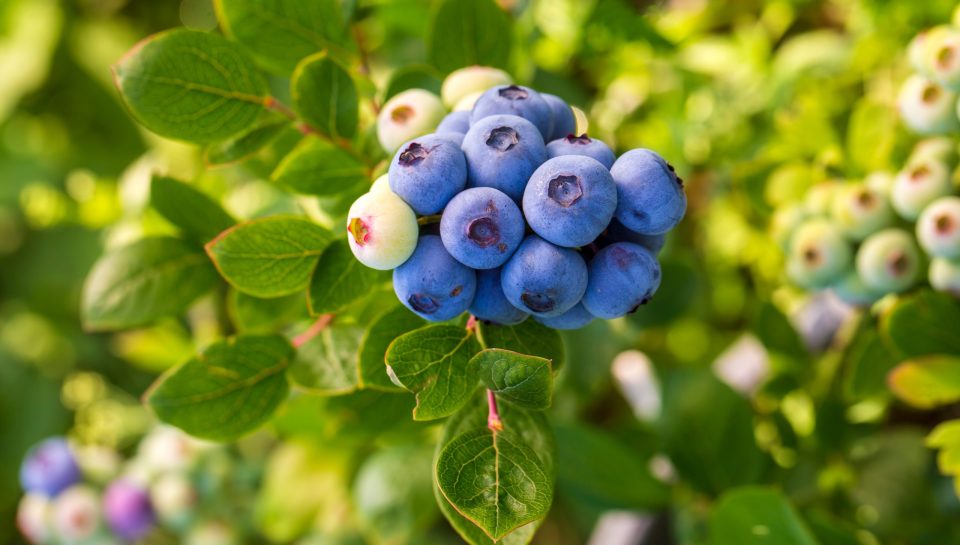

Short answer: between KSh 500 and KSh 4,500 per kilogram — depending entirely on where you stand in the chain. Bulk buyers sourcing directly can land fruit at KSh 500–1,200/kg. Farm-gate for good-quality berries sits around KSh 1,400–2,000/kg. Walk into a premium Nairobi supermarket and the same fruit will ask KSh 2,500–4,500/kg.
That is a ninefold spread on a single commodity inside a single country. For most Kenyan produce — a bag of potatoes, a crate of tomatoes, a kilo of French beans — a spread like that would be impossible. The market would arbitrage it away in a week.
Blueberries are different, and the reason why is the most interesting thing about this crop.
Why the price is all over the place

A price spread that wide is not a pricing problem. It’s a supply problem wearing a pricing costume.
Kenya does not yet have a functioning blueberry market. It has a handful of producers, a thin import stream, and a demand curve that has run considerably ahead of both. When supply is scarce and fragmented, price stops being discovered by the market and starts being set by whoever is holding fruit that morning.
Three forces are pulling in different directions:
1. Kenya still imports most of what it eats. For years the blueberries on Nairobi shelves came in from South Africa and Egypt. Imported fruit carries airfreight, cold chain, duty and importer margin before it ever reaches a shelf — which is most of what you’re paying for in that KSh 4,000 punnet.
2. Local production exists, but it is tiny. A small number of Kenyan growers are producing commercially. The best-known pioneer, Anthony Kamiti in Limuru, grows in containers and sells at around KSh 2,000/kg — and by his own account cannot keep up with individual buyers walking to his gate. When a producer sells out at the farm every week, there is no incentive to discount.
3. Kakuzi is about to change the arithmetic. The listed agribusiness ran a 10-hectare blueberry trial, and in late 2025 its parent Camellia backed the decision to convert it into a commercial operation — targeting roughly 202 acres by 2029, with capital allocated across a six-year window. Kakuzi’s blueberry block is already GlobalG.A.P., GRASP, SPRING and SMETA certified, which tells you exactly who the intended customer is: European retail.
Hold those three facts together and the picture clarifies. Today’s Kenyan blueberry price is a scarcity price. It is not the price this fruit will command in 2029.
Can blueberries actually grow in Kenya?
Yes — but not everywhere, and not casually.

Blueberries (Vaccinium spp.) are North American in origin and they want two things Kenyan soils rarely offer for free: acidity and consistent cool. Target soil pH is roughly 4.5–5.5. Most Kenyan agricultural soil sits well above that. They also want steady moisture — around 3 litres per plant per day — without ever sitting waterlogged.
This is why nearly every successful Kenyan operation you’ll read about uses one of two workarounds:
- Container growing with ericaceous or custom acidic media, which makes pH a controllable variable rather than a permanent battle with the soil.
- Protected cultivation — polytunnels and shade structures that create a managed microclimate, stabilise irrigation and take rainfall variability out of the yield equation.
The cool-highland belt — Limuru, Kiambu, Nyandarua, Nyeri, parts of the Rift and the Mau escarpment — offers the temperature profile. What it doesn’t offer is the pH. That gap is the entire technical story of blueberry farming in Kenya.
The honest maths of a blueberry acre
Most of what circulates online about blueberry profitability in Kenya multiplies a peak yield by a peak price and calls the answer “income.” It isn’t. Here’s the version with the lag put back in.
What you spend
| Line item | Indicative range |
|---|---|
| Certified seedlings | KSh 1,500–2,500 each (specialist varieties run far higher) |
| Plants per acre | ~1,400–1,600 |
| Establishment (seedlings alone) | KSh 2.1M–4.0M per acre |
| Annual operating cost per acre | KSh 500,000–700,000 |
| Irrigation, media, mulch, structures | Additional, and not optional |
What you get — and when
| Stage | Yield per plant |
|---|---|
| Years 1–3 | Effectively nothing; establishment |
| Years 3–5 | 0.5–1 kg |
| Year 8+ (mature) | 5–10 kg |
That table is the part the profit guides skip. A three-year-old Kenyan blueberry planting realistically produces well under a kilo per plant. The KSh 10,000–20,000 per plant figures you’ll see quoted describe a mature, well-managed, eighth-year bush selling into a scarcity market — three assumptions stacked on top of each other, any one of which can fail.
The real shape of the investment: several million shillings per acre, three to five years before meaningful revenue, and a crop that punishes inattention to pH and water. It is a genuinely high-return crop for operators with patient capital and technical discipline. It is a very efficient way to lose money for anyone treating it as a get-rich-quick planting.
Where the actual opportunity sits
Here is the part that matters if you’re thinking commercially rather than agronomically.

The global blueberry trade has been one of the fastest-growing fresh produce categories on earth — imported volumes climbed from roughly 66,000 tonnes in 2002 to about 779,000 tonnes by 2021, compounding around 14% a year, with import value growing even faster than volume. That last detail is the whole thesis: buyers have been paying more per kilo, not less, while volumes multiplied elevenfold. Demand has consistently outrun supply for two decades.
East Africa’s structural advantage in that market is the same one it has in avocado, in green beans, in flowers: counter-seasonality and altitude. Northern hemisphere blueberry supply has a window. Kenyan highland production, correctly managed under protection, does not have to respect it.
Which is precisely why Kakuzi is certifying to GlobalG.A.P., GRASP, SPRING and SMETA before it has meaningful volume. Those four certifications are not agronomy — they are a passport into European retail. The company is building the compliance layer first and the tonnage second.
That sequencing is the lesson, and it generalises well beyond blueberries. Kenyan produce rarely fails on quality. It fails on traceability, on certification, on cold-chain integrity, and on the ability to prove a claim to a buyer 6,000 kilometres away. Any grower planning to sell Kenyan blueberries into Europe or the Gulf should be building certification and traceability into the planting plan — not bolting it on in year four when a buyer finally asks.
What this means for you

If you’re buying blueberries in Kenya: ask where the fruit came from. Imported South African or Egyptian fruit and locally grown Limuru fruit sit on the same shelf at similar prices but carry very different freshness profiles. Local fruit bought in bulk direct from a producer is where the value is; the supermarket punnet is where the import margin is.
If you’re thinking of growing them: budget for containers or protected cultivation, budget for pH management as an ongoing monthly discipline rather than a one-time soil amendment, and budget for three to five years of patience. Start small enough that the learning curve doesn’t bankrupt the venture. And source certified planting material — variety selection is doing more work here than in almost any other Kenyan crop.
If you’re building for export: the certification stack is the product. Fruit is the easy part.
Frequently asked questions
How much is a kilo of blueberries in Kenya? Between KSh 500 and KSh 4,500 depending on channel. Wholesale and bulk direct-from-farm sits at KSh 500–1,200/kg. Quality farm-gate fruit runs KSh 1,400–2,000/kg. Premium supermarket and specialty retail reaches KSh 2,500–4,500/kg.

Where can I buy blueberries in Nairobi? Premium supermarket chains and specialty fruit outlets stock them, largely imported. For fresher fruit and better pricing, buy direct from producers in the Limuru–Kiambu highland belt, or order in bulk where a producer will quote a wholesale rate.
Can blueberries grow in Kenya? Yes, in cool highland areas — but only with acidic growing media (pH 4.5–5.5) and consistent irrigation. Container growing and polytunnel cultivation are the two approaches producing reliable results locally.
Is blueberry farming profitable in Kenya? It can be, with a long horizon. Establishment runs to millions of shillings per acre and meaningful yields don’t arrive for three to five years. The margins at maturity are strong precisely because the barriers to entry are high.
Does Kenya export blueberries? Volumes are still small, but the trajectory is clear. Kakuzi has moved its blueberry trial to commercial scale with European retail certifications already in place, targeting roughly 202 acres by 2029.
Why are blueberries so expensive in Kenya? Scarcity, import dependence, and expensive planting material. Kenya’s local supply is a fraction of demand, so a large share of fruit is imported with airfreight and cold-chain costs attached. As Kakuzi and others scale domestic production, expect that premium to compress.
A closing note from XCADO
At XCADO Group we operate as a principal exporter of East African produce — taking title to goods and moving them into markets in China, Europe, the UK and the Middle East. Our core lines are Hass avocado, tea, coffee and fresh produce.
We track blueberries because the category is doing something instructive: a crop with no meaningful Kenyan history, no established price discovery and no domestic supply base is being built certification-first for a European buyer that doesn’t exist yet. That is exactly the right order of operations — and it’s a useful mirror for every other Kenyan export line still trying to work backwards from a container to a compliance file.
If you’re a grower, aggregator or buyer working in East African fresh produce and want to talk about routes to market, we’re reachable at info@xcado.africa.
